Recall that in
previous courses in this program you have learned about child development,
family systems, and the significant influences adult relationships have on
children's social, emotional, and cognitive growth and the forming of social
identities. Next, think about what you learned about classism, racism, gender
stereotyping and sexism, and other"-isms" prevalent in our society.
Consider the ways in which these "–isms" influence people's well-being.
Now, imagine that you are an early
childhood professional who is experiencing one or more of the "-isms"
in your personal life. i.e., people are reacting to you with stereotypes and
prejudice.
How might such
experiences affect your own emotional, cognitive, and physical well-being? How
might this impact your work with young children and their families? Describe in
detail the consequences you might expect for the children and families with
whom you work while you experience specific "–ism(s)" in your own
life. Include specific examples either those you have and/or are experiencing
or ones you would anticipate.
Throughout this program we
have examined the effects and causes of many isms. We have even discussed the
social, emotional and developmental effects they can have on a child’s
well-being. During the work throughout this program my definition and
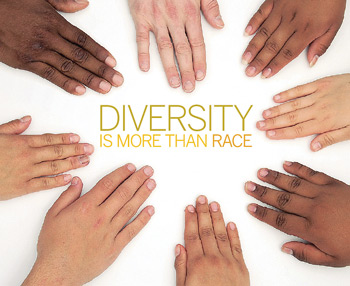
understanding about what the term diversity means has deepened. As I have
already stated, before within this course I overlooked many of the “isms” and
had not at all considered family culture as crucial components that coincide
with diversity. It is amazing the influence that we as educators can have on a
child’s view of the world. It is our duty to ensure that we are offering
unbiased opportunities for children to feel secure, powerful and safe while
deciding on and deciphering their roles as individuals. It is important to note
that I truly believe that everyone faces some form of discrimination,
prejudice, or stereotypes in one way or another. Personally, I have experienced
sexism against being a woman. I hate bringing my car to the garage for
mechanical work because I feel as though my opinion is often overlooked and
ignored. I have faced inappropriate advances and tasteless jokes in my personal
and professional life. I believe that my experiences in dealing with this ism
could interfere with my work with children and their families because I may
take situations dealing with sexism to heart and find being objective difficult.
I have shared this experience before but one specific example is when I was
asked by a father to only address him and not his wife during conferences etc.
If I had news about his son or needed to get in touch with anyone regarding
their son I was only supposed to reach out to the father. I found these
directions extremely hard to follow because they infuriated me and made me feel
as though he felt that women were beneath men. I needed to put my biases and
opinions aside in order to benefit the student.
 Children are growing up in a world full of contradicting
ideas. They are taught that all people are created equal and therefore should
be treated as equals and yet they live in a world in which this is definitely
not the case. “In general, children have a deep desire for fairness. They want
to be treated fairly, and they have a natural inclination to want the world to
be fair for others. When children have the means to think about what they see,
hear and read… they are more equipped to analyze their world” (Derman-Sparks &
Olsen Edwards, 2010, p.155). It is our duty to show people that this should be
the case by teaching an anti-bias curriculum and supporting true diversity
within the classroom.
Children are growing up in a world full of contradicting
ideas. They are taught that all people are created equal and therefore should
be treated as equals and yet they live in a world in which this is definitely
not the case. “In general, children have a deep desire for fairness. They want
to be treated fairly, and they have a natural inclination to want the world to
be fair for others. When children have the means to think about what they see,
hear and read… they are more equipped to analyze their world” (Derman-Sparks &
Olsen Edwards, 2010, p.155). It is our duty to show people that this should be
the case by teaching an anti-bias curriculum and supporting true diversity
within the classroom.
References
Derman-Sparks, L., & Edwards, J. O. (2010). Anti-bias
education for young children and ourselves. Washington, DC: National
Association for the Education of Young Children (NAEYC).


.jpg)
.jpg)

.jpg)


.jpg)